I can do anything, but I can't do everything

I've shipped more work in these last few weeks than I'd normally get through in a whole year. I've built an entirely new tech company from the ground up – the infrastructure, the APIs, multiple applications, the marketing, the lot.
So I sit down and take a break, just long enough to form a new thought. "Right. What's next?"
There's something genuinely strange going on in our industry. If you're an experienced software engineer, you can now do a full day's work in about an hour. AI handles the legwork. You supply the thoughts, ideas and judgement, and the AI does the rest. Given the right guardrails, the output is of a similar quality to what it always was. It's just… 10-100x faster.
Which raises an interesting question. If the end result is identical, why does it matter how long it took? Well, it changes the dynamic of work. Right now, most people are paid for their time. You might currently get paid to work a 9-5. But if you get your work done by 10am, why would an employer pay you for the remaining 7 hours? And this only gets worse as AI gets better. What happens when my daily work can be achieved in 10 minutes?
There's a whole debate to be had here around whether we should pay people for their time, or whether we should pay for outcomes. But I'm actually more interested in what we spend our remaining time working on.
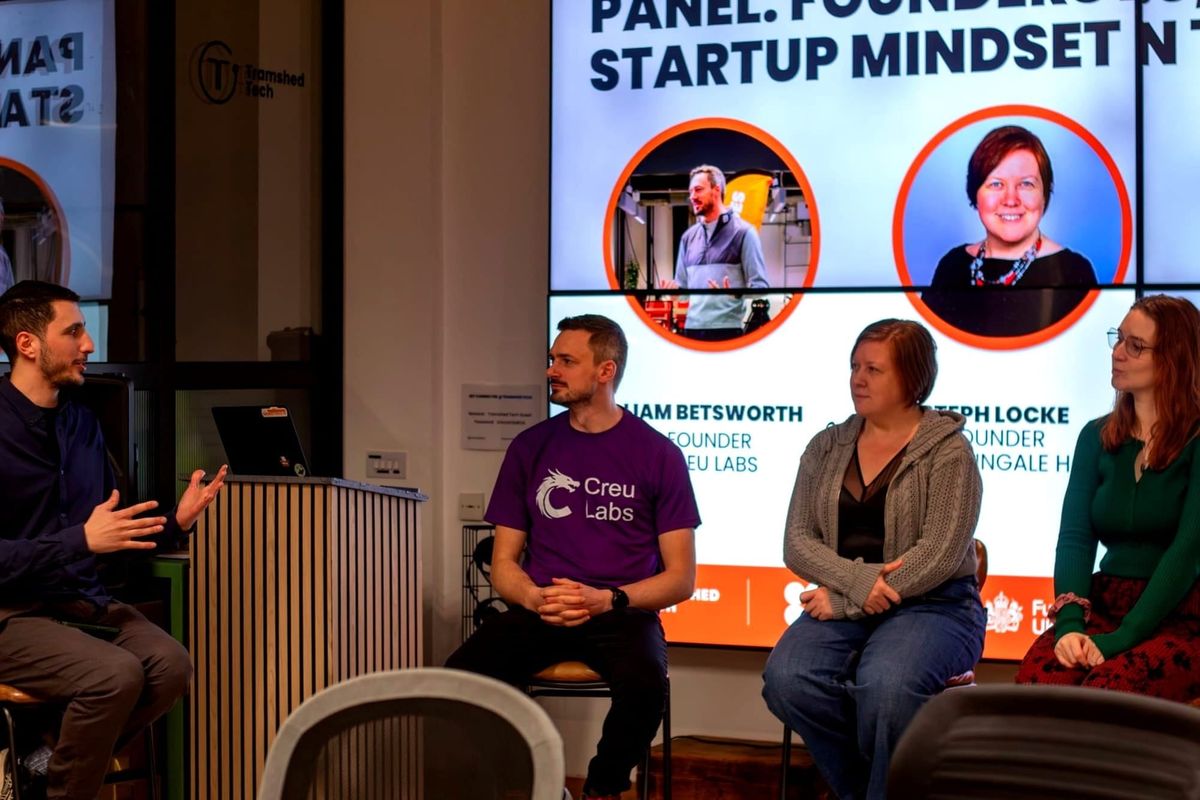
A few weeks ago I got invited onto a panel at the AI.Challenges event at Tramshed Tech. Questions centred on how the founder role is changing in the age of AI. The discussion was really interesting, with some great perspectives. Then again this week I got invited onto a podcast to discuss a similar topic.
This isn't just me having a crisis at my desk. This is something that founders and technical leaders everywhere are trying to figure out. If AI makes execution almost trivially fast, what is the job now?
In my effort to figure that out, I tried to do everything.
Five different things in one morning. A new feature. Editing a video. A sales deck that I'd been putting off. This blog post, actually. And attending a funding workshop.
Everything feels urgent. Every idea feels like it's an hour or two away from being real. In reality, I'm generating momentum in many directions simultaneously, which if you remember your GCSE physics, means you end up going nowhere.
I've since spoken to a few other founders about this. I'm definitely not alone here. One told me he'd started writing down how he was going to spend his week on a Sunday night, then refusing to let himself deviate. Another spends two weeks on business development, then two weeks on product strategy and development. No crossing the streams.
I'm great at getting important and meaningful work done, but honestly, I need to work harder to protect my time and stay on track.
This is where Pendra comes in. Quick context for anyone who hasn't been following along: Pendra is a managed AI inference platform I've been building for regulated UK industries, providing the ability to use AI securely within the UK.
I believe in this thing. But believing in something and actually making it work are two very different activities, as anyone who's ever tried to assemble IKEA furniture with confidence alone, will confirm.
For months I was splitting my time between Pendra and about five or six other ideas rattling around the venture studio. Every one of them had some potential. Every one of them could have been something. But I was lying to myself. I was doing the exact thing I'd told other founders not to do. Spreading thin. Hiding behind the comfort of building features. Avoiding the bit that actually matters, which is building a business.
So I made the call. Pendra is my big bet that I am going to dedicate the majority of my time to.
We spend a lot of time talking about how AI makes us more productive. It does. But I'm starting to think productivity isn't actually the thing that matters in this new world.
When you can do anything, the only question that counts is, 'what are you going to do?' For me, that's Pendra. One product. One market. Proper focus, for once in my life.
I can do anything. I just can't do everything.